
Cars Against Humanity: The North American Car Dependency Epidemic
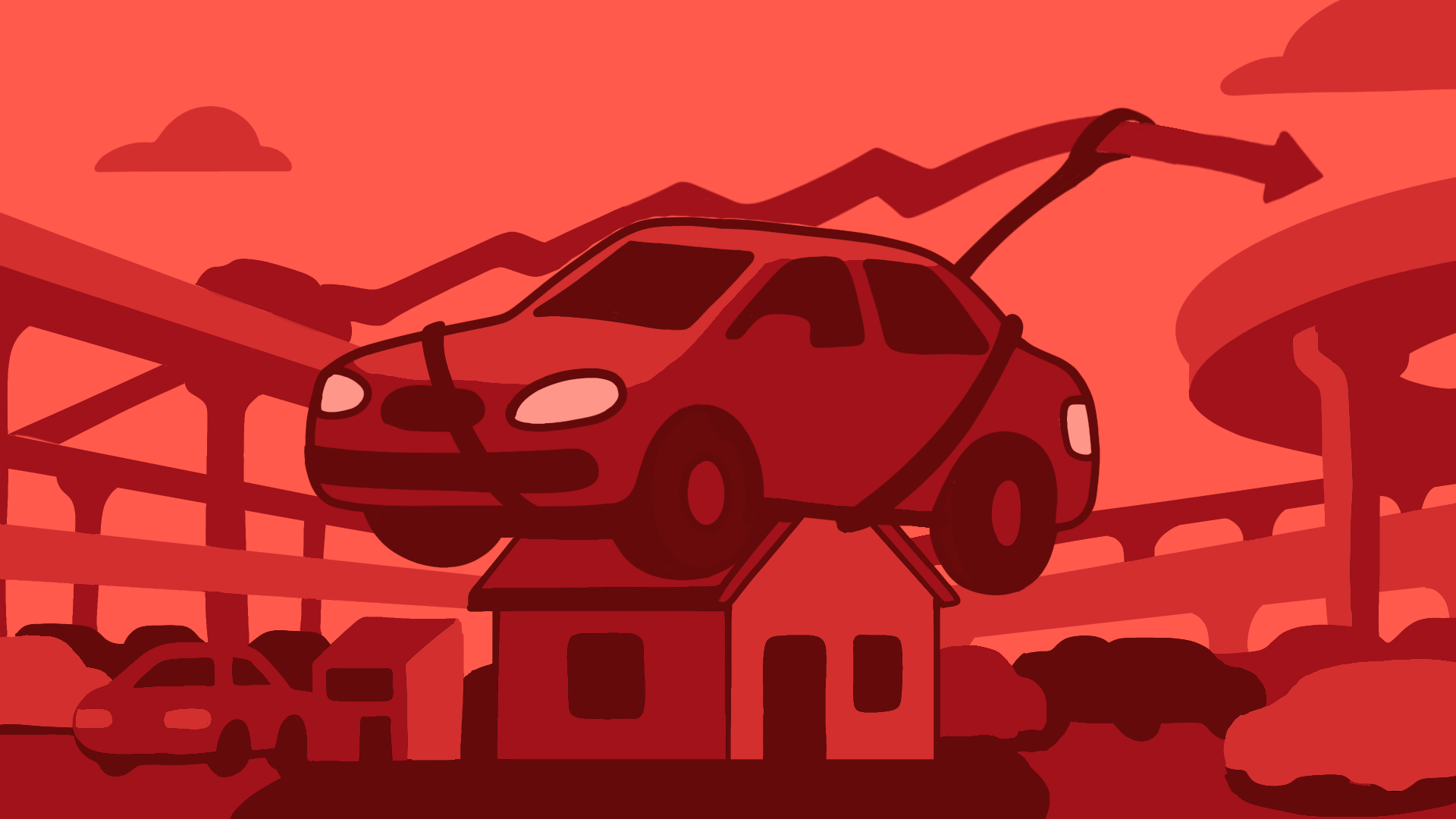
For many across North America, cars are more than simple modes of transportation. They represent status, freedom, and modern living. In Canada and the United States, government policies that emerged in the wake of World War II cemented cars as central to daily life. However, this dependence on cars has brought with it significant economic consequences. Car ownership is one of the largest household expenses for North American households, sprawling infrastructure is costly to maintain, and productivity suffers when areas are built for cars rather than people.
This article will argue that while cars will always remain an important part of North American life, keeping them central to urban and suburban planning can drain household finances, burden public budgets, and limit long-term growth.
The Origins of North American Car Dependency
Whether for quick stops to the grocery store or long scenic road trips, the car has become the default way many North Americans move. This reliance did not emerge overnight but was instead built through decades of government policies and urban design choices across the continent. Car dependency describes a system in which neighbourhood and city layouts, along with transportation infrastructure, make cars not just convenient but often the only realistic option for getting around. As a result, walking, cycling, or public transit become second-class options, either because cities are not built to support them or because of lingering social perceptions that discourage their use.
In the United States, the symptoms and roots of car dependency are well-documented. Post-war policies in the mid-20th century prioritized highway construction, suburban expansion, and single-use zoning. Analysts have also highlighted several key reasons why America’s reliance on cars has lingered, primarily including cheap fuel prices and tax revenues on gasoline contributing almost exclusively to roadway expenditures, creating a feedback loop. Many American cities also dismantled streetcar systems between the 1920s and the 1950s, permanently reshaping the use of and access to public transportation.
Similarly, Canada followed a parallel yet slightly more balanced trajectory. Its cities, while still influenced by car-oriented planning, generally developed at higher densities and maintained stronger public transit networks than those in the United States, resulting in more walkable, people-friendly urban cores. However, this advantage fades quickly beyond downtown areas. Like our southern neighbour, Canada embraced post-war suburban sprawl, making zoning rules and infrastructure decisions that favoured detached homes and highways over compact, mixed-use development. The result is a hybrid landscape, with cities that appear less car-dependent on the surface, yet remain heavily shaped by the same low-density ideals that define much of North American suburbia.
Comparisons to Europe
Canada and the United States are often seen as the epicentres of car dependency in the developed world, especially compared to much of Europe. While roughly 85 per cent of all trips in the United States and Canada are made by private vehicle, European nations average closer to around 48 per cent, supported by extensive rail, bus, and cycling networks that are woven directly into urban life. Car ownership levels reflect a similar divide: the United States has around 860 cars per 1,000 people, compared to about 560 across the European Union. The roots of this divide lie as much in city design as they do in policy. European cities, which were shaped long before the dawn of the automobile, are constructed around compact, mixed-use neighbourhoods that make essential services accessible within short walking or transit distances. By contrast, North American cities grew during the era of mass car ownership, when stricter zoning codes separated residential, commercial, and industrial uses, forcing longer commutes and making driving the default. The result is auto-oriented sprawl. Even when North American cities attempt to retrofit public transit or bike infrastructure, these systems struggle against decades of design prioritizing road capacity and parking. The urban form of most European cities, meanwhile, sustains an environment in which the car is a choice, not a basic requirement for mobility.
The Consequences of Urban Sprawl
Urban sprawl, referring to the outward expansion of low-density suburbs, has become one of the most expensive legacies of North American urban planning. Economically, sprawling development strains public finances by requiring far more infrastructure per resident than compact urban growth. Roads, sewer systems, and utilities must extend over greater distances, increasing both initial construction and long-term maintenance costs. This is especially visible in the massive spending for highways, such as the Texas Department of Transportation’s 2024 budget allocating $7.98 billion USD for highway projects. The financial burden of servicing low-density areas is profound; research indicates that low-density sprawl can cost a municipality up to 50% more per capita to provide public services compared to compact development. The embedded costs of mandatory parking infrastructure further exacerbate this burden. It is estimated that the United States has over two billion parking spaces, with construction costs ranging from $5,000 to $10,000 USD per surface spot and $25,000 to $50,000 USD in a structured garage. These immense costs, often hidden, are ultimately passed through to consumers in higher rents and prices. The culmination of these inefficiencies is a massive drag on the national economy, with one comprehensive report estimating that sprawl costs the American economy over $1 trillion USD annually in unnecessary infrastructure and lost productivity, representing a profound misallocation of capital.
Straining Household Budgets
Additionally, the car-centric design of North American cities brings about a massive and sometimes unsustainable burden on household budgets, creating competition between transportation and other expenses that can put a strain on millions of families. In the United States, transportation consistently ranks as the second-largest household expense behind housing, consuming about 16 per cent of annual expenditures. The operational cost is immense, with the average annual cost to own and operate a new car reaching $12,182 USD, or over $1,000 USD per month. In Canada, the situation is similarly dire, where the average monthly cost of car ownership exceeds $1,300 CAD. For a median-income household, this can consume over 20 per cent of their pre-tax income, a burden that is most severe for low-income families, who may be forced to spend up to 30 per cent of their disposable income on transportation alone. Combined with the rising costs of other necessities like shelter and food, this dynamic highlights a hidden trade-off in suburban living, one in which lower-density neighborhoods require car ownership for nearly every trip, forcing households to dedicate a significant portion of their budgets to transportation. The result is a cycle of dependency on private vehicles, where long commutes and dispersed services amplify financial pressures.
Trade-Offs in Productivity
The systemic inefficiencies of car-centric urban design impose a substantial drag on economic productivity, translating into billions of dollars in lost output and wasted time each year. The most visible symptom is traffic congestion, which cost the average American driver $869 USD last year and amounted to an estimated $81 billion USD drain on the United States economy. In Canada, the per-driver burden is even more severe. For instance, drivers in Toronto spent 199 hours and those in Vancouver 197 hours in rush-hour traffic in 2022—among the highest figures in North America. This “traffic tax” directly erodes labour productivity by delaying the movement of both workers and goods. The issue is compounded by a persistent job-housing mismatch, where zoning and land-use policy separate employment centres from affordable housing. In the Greater Toronto and Hamilton Area, these commuting inefficiencies are estimated to cost the region roughly $10 billion CAD annually in lost productivity. Over time, these inefficiencies compound into a drag on economic performance. As workers and businesses lose time, face higher fuel expenses, and suffer from reduced labour mobility, the broader economy experiences slower growth and diminished productivity potential. Ultimately, the persistence of car dependency reflects deeper structural issues, such as fragmented urban planning and underinvestment in public transit, as mentioned previously, that collectively weaken North America’s long-term economic competitiveness.
What Can Be Done?
A path forward lies not in abandoning cars but in creating cities that make driving only one of many viable options. Across North America, momentum is slowly shifting toward this vision. Governments are beginning to recognize that improving mobility means investing in public transit, walkable streets, and mixed-use neighborhoods where people can live, work, and shop within the same area. In the United States, the Reconnecting Communities Program funds efforts to repair neighborhoods divided by highway construction, transforming overbuilt corridors into safer, more accessible urban spaces. In Canada, the Housing Accelerator Fund supports zoning reform and higher-density housing near transit hubs, reducing the need for long car commutes. These initiatives, while modest, reflect a growing understanding that urban design is economic policy: compact, connected cities are more efficient, resilient, and productive. By aligning infrastructure spending with sustainable planning, North America can begin to unwind decades of car-dependent growth and chart a path toward a more balanced urban future.
Cars will never disappear. They remain essential for many households and industries, and they will always play a role in how Canadians and Americans live. But the degree to which our cities and economies revolve around them is a choice that carries real costs. Over decades, prioritizing single-occupancy vehicles has meant higher infrastructure spending, longer commutes, and lost opportunities to invest in more growth. If we continue to treat car dependence as an inevitability, we risk locking ourselves into this cycle of rising costs and stagnant productivity. The question we must ask ourselves is not whether cars belong in our future, but whether we want them to define it.