
Health & Innovation

From tracking daily steps to monitoring sleep and recovery, wearable technology has transformed health into something constantly measured and optimized. In this article, Health & Innovation writer Lauren Harhay explores how devices like the Apple Watch, WHOOP, and Oura Ring have become embedded in modern wellness culture. Drawing on recent research, the article explores how wearable technology can encourage healthier habits while also creating a growing reliance on health metrics and constant self-tracking. Harhay considers whether these devices truly improve well-being or if they risk replacing our bodies’ intuition with data.

The “missing half” represents the historical underrepresentation of women in medical research, resulting in gaps in evidence-based care for half of the world’s population. In this article, Health and Innovation Editor Isabel Brick examines the causes and consequences of the gender health research gap, including limited clinical trial representation and underinvestment. The article explores how closing this gap can improve women’s health outcomes while creating significant economic opportunities through increased productivity, healthcare savings, and innovation.

In recent years, ADHD diagnoses have risen dramatically. This shift has simultaneously transformed the public perception of the disorder, sparking conversations surrounding who gets access to the diagnosis, and subsequently treatment and accommodations. In this article, Health and Innovation Editor Elizabeth Kim investigates how evolving diagnostic practices have expanded recognition of historically overlooked groups, while also examining the rise of new misconceptions and stigma. The article explores the benefits and unintended consequences of increased ADHD visibility, suggesting that greater recognition must be paired with accuracy, and careful handling treatments to cultivate a deeper public understanding of what living with ADHD can mean.
From tracking daily steps to monitoring sleep and recovery, wearable technology has transformed health into something constantly measured and optimized. In this article, Health & Innovation writer Lauren Harhay explores how devices like the Apple Watch, WHOOP, and Oura Ring have become embedded in modern wellness culture. Drawing on recent research, the article explores how wearable technology can encourage healthier habits while also creating a growing reliance on health metrics and constant self-tracking. Harhay considers whether these devices truly improve well-being or if they risk replacing our bodies’ intuition with data.
The “missing half” represents the historical underrepresentation of women in medical research, resulting in gaps in evidence-based care for half of the world’s population. In this article, Health and Innovation Editor Isabel Brick examines the causes and consequences of the gender health research gap, including limited clinical trial representation and underinvestment. The article explores how closing this gap can improve women’s health outcomes while creating significant economic opportunities through increased productivity, healthcare savings, and innovation.

In the form of matcha lattes, kimchi salads, and perfectly wrapped buns, East Asian cuisines have burst to the forefront of foodie scenes across North America. As viral popularity fuels rapid innovation and spin-offs vying for market share, Senior Editor Annabella Luo explores the implications of food discovery gained short-form content – and how East Asian communities can retain ownership of the edible pieces of their histories.

Microplastics have made their way from the ocean into the human body, showing up in blood, placentas, and even the testes. John Bae explores the mounting evidence tying them to plummeting fertility and sperm counts, how they disrupt hormones and reproductive cells, and what you can do to limit your exposure.

Many journalists, behavioural scientists and other experts have tried to explain the dip in alcohol sales among Gen Z consumers. Some attribute it to younger demographics having more concern for their health, the cost-of-living crisis, or preferences for marijuana instead. In this article, Editor Amy Simcoe aims to get to the root of the issue, exploring factors like the job market, Gen Z’s drug use and messaging surrounding health and wellness. This article will also explore the companies capitalizing on the ‘mocktail’ trend, and where the adult beverage industry is headed.

Gen Z is shifting the gym industry by treating fitness centres as highly active social hubs and wellness spaces, directly threatening the traditional business model that relies on members paying but staying home. While Planet Fitness faces rising variable costs and strained franchise margins due to this surge, PureGym is thriving by successfully monetizing actual presence through diversified ancillary revenues, personal training, and premium membership tiers

The rise of the viral $20 Hailey Bieber Strawberry Glaze Skin Smoothie at luxury grocery chain Erewhon serves as a case study for how the health and wellness industry has been commodified into a performative status symbol. While these trends project an exclusive aesthetic of wealth and privilege on social media, they simultaneously create massive accessibility gaps for everyday consumers facing food insecurity. Ultimately, this shift highlights a broader societal issue where nutrition and self-care are packaged as premium luxury experiences rather than universal goods
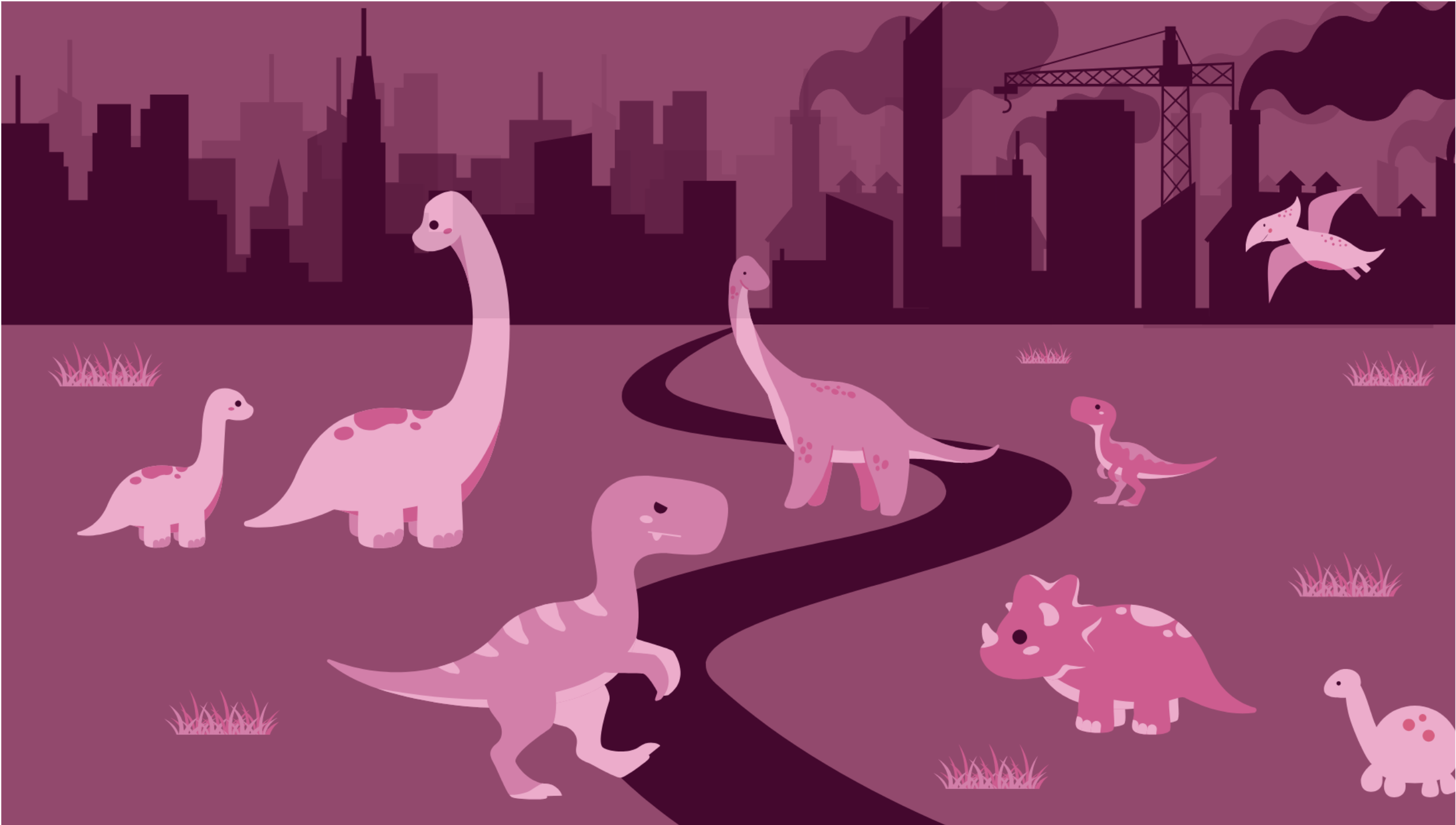
In Queen's Business Review (QBR) Health and Innovation portfolio, Editor-in-Chief Jacob Kranjac revisits Robert Mitchnick’s decade-old article, “The Dinosaurs Are Back,” exploring how the conversation around overpopulation and humanity’s greatest threats has evolved into a more complex and pressing global challenge.

Behind the “thrilled to announce” posts lies a quieter reality: imposter syndrome, social comparison, and the pressure to keep up. In this recent editorial, Health & Innovation Editor Isabella Peng critiques LinkedIn's growing influence in academic spaces and its role in shaping students' identities. With the ever-growing pressure on students to build a personal brand on LinkedIn, this article examines how the platform has turned career development into a source of anxiety affecting student well-being. Peng draws on insights from seasoned career coaches to explore ways to propel the academic space toward a more authentic career culture.

In this article, Editor Amy Simcoe explains how the New York Times used daily puzzles as an innovative marketing strategy to broaden their engagement and drive new usership. Given that news sources are vying for their share in the attention economy, particularly against social media, this rollout gave the publication a leg-up against competitors. While this strategy allowed the NYT to bridge the gap between fun interactivity with their professional brand image, Simcoe explores how the Games app could set a precedent in blurring the lines between entertainment and news

Artificial intelligence is making big changes in how we approach health and infrastructure. In this article, Liam Woolstencroft explores how AI helps doctors diagnose diseases more accurately and researchers develop new treatments faster. He also looks at how AI is improving infrastructure, from managing energy grids more efficiently to preventing costly breakdowns with predictive maintenance. While the benefits are clear, Liam also considers the challenges, including privacy concerns and the high costs of adopting new technology. This article offers a balanced view of how AI is shaping two critical areas of our lives.

Biometric technologies, once the domain of science fiction, have become integral to modern life, enhancing security and convenience across various sectors. QBR Editor Ining Wei examines the evolution of biometric authentication, its applications, and the associated reliability and security challenges, and also explores the legal and privacy implications, highlighting existing frameworks like the Illinois Biometric Information Privacy Act and proposing future measures to address emerging concerns. Through a comprehensive analysis, the article aims to provide insights into the complexities of biometric technology and its impact on society.

In this editorial, QBR Senior Technology Editor Isaac Moore explores how advancements in virtual reality (VR) and artificial intelligence (AI) are reshaping sports training, performance analysis, and officiating. VR enables athletes to train efficiently, reduce injury risk, and simulate high-pressure scenarios, while AI tools like the Video Assistant Referee (VAR) ensure greater accuracy and fairness in sports officiating. The editorial also delves into the benefits and challenges of these technologies, including their high costs, privacy concerns, and the impact on traditional training methods. As sports enter a new era, this article examines the balance between technological innovation and preserving the core values of athletic competition.

In an era where cyber threats are growing, quantum cryptography promises a new frontier of data security. Technology and Innovation Editor Liam Woolstencroft unveils how this innovative technology, rooted in quantum mechanics, is set to protect sensitive information like never before. From safeguarding financial transactions to ensuring the privacy of healthcare data, this article explores the groundbreaking potential of quantum cryptography and the challenges that must be overcome to make it a reality.

With the rise of autonomous vehicles comes the introduction of intricate ethical dilemmas posed by this technology. QBR Editor Ining Wei explores how the classic ‘trolley problem’ shifts from a philosophical thought experiment to a real-world challenge for developers, policymakers, and society. This article delves into the key ethical considerations surrounding autonomous vehicles, applicable ethical frameworks, the complexities of assigning liability, and the broader implications for the future of transportation.

Have you ever wondered how your home, bike, or car might be powered years from now? Senior Technology and Innovation Editor Isaac Moore provides an analysis of how perovskite, a synthetic semi-conductor in new solar cells, is supporting the creation of next generation solar panels. The article breaks down the solar energy conversion process, how perovskite changes it, and the challenges preventing the immediate success of the perovskite solar cells.

Analyzing the increasing involvement of AI in military operations, Isaac Moore discusses how AI has progressed from handling simple tasks to taking on complex military roles. While it has notable efficiency and potential to reduce casualties, the editorial examines the ethical concerns and risks.

In our latest editorial, QBR Technology Editor Isaac Moore paints a picture of the severity of the current fake news crisis by exploring the fundamentals of social media algorithms and how they are elevating the distribution of misinformation. Social Media's Role in Turning Lies to Likes calls out the problems with the programming behind our favorite social media apps, while describing the steps society needs to take to prevent the surreptitious spread of fake news online.

In our first editorial of 2024, QBR Editor Erin Sun delves into Amazon's Climate Pledge, highlighting its ambitious $2 billion investment and the roll-out of 100,000 electric delivery vans by 2030. This initiative, a response to the pressing climate crisis, aims to significantly reduce Amazon's carbon footprint. Sun raises a critical question: Will this move mark a significant shift in corporate environmental responsibility, or is it just a small step in the face of global challenges?


This article analyzes Canada’s emerging tech talent recruitment strategy- outlining its pros and cons, and ultimately discussing how Canada will change as it begins to sell itself as the next global tech talent hub.

In this incisive piece by QBR Editor Erin Sun, traditional firefighting meets cutting-edge technology. Through a tapestry of historical context and modern solutions, Sun illuminates the burgeoning role of AI, drones, and robots against the wildfire menace. Seamlessly weaving challenges with potential solutions, she advocates for a harmonized future of tech and human expertise to combat fires more effectively.

Rather than pitting the two against each other and assuming their differences negates the existence of the other — work generated by humans and machine learning algorithms can form a relationship of mutualism as we adapt to the next paradigm shift of our times.

Although the dream of home ownership is quickly spiralling out of reach for many hardworking Canadians, there may finally be some light at the end of the tunnel. Through further innovation, advancement, and awareness, modular and boxed housing alternatives have the potential to achieve widespread social acceptance and shape the way future generations live.

AI is not the silver bullet in the fight against climate change. All research shows that AI is one of the many innovations the world will require to mitigate and adapt to the effects of a hotter world. One issue limiting the impact of AI is that current AI solutions are disconnected and independently challenging to scale. In future years, look for emerging companies that leverage AI to offer complete climate-based risk assessment

In a society fuelled by capitalism and driven by profit, how many industries are lacking the benefits of modern technology—decades behind the large waves of advancement—due to little to no profit potential and low demand? Acknowledging the various incentives, capabilities, and barriers, that form the source of innovation inequity is the first step in working towards more holistic (and conscious) innovation.

Complex problems require innovative and creative solutions, and the union of physics and artificial intelligence provides the necessary building blocks for uncovering powerful answers. The most difficult situations may still be yet to come, but with continuous breakthroughs in science and technology, researchers will have many tools and techniques at their fingertips.

If left unmonitored, our homes may begin to resemble a panopticon, wherein we can be observed and influenced at all times. We must consider our willingness to make the trade-off between convenience and having the innermost parts of our daily lives recorded on the digital cloud, ready to be dispensed to sell us products via devices we initially used for one compartmentalized purpose.

The future of AI is unpredictable. We know so much about it, yet everyday there seems to be more to learn. We have yet to uncover the true potential of AI, not only in fashion, but, around the world. Artificial intelligence gives life to new low-budget designers but could also potentially be the end of many experienced designers in large companies
In recent years, ADHD diagnoses have risen dramatically. This shift has simultaneously transformed the public perception of the disorder, sparking conversations surrounding who gets access to the diagnosis, and subsequently treatment and accommodations. In this article, Health and Innovation Editor Elizabeth Kim investigates how evolving diagnostic practices have expanded recognition of historically overlooked groups, while also examining the rise of new misconceptions and stigma. The article explores the benefits and unintended consequences of increased ADHD visibility, suggesting that greater recognition must be paired with accuracy, and careful handling treatments to cultivate a deeper public understanding of what living with ADHD can mean.