
Illustrated by Evelyn Turnbull
It’s war. Not the kind fought with weapons; it’s the kind that involves waiting in virtual lines hoping to get face value tickets. It’s Ticketmaster war.
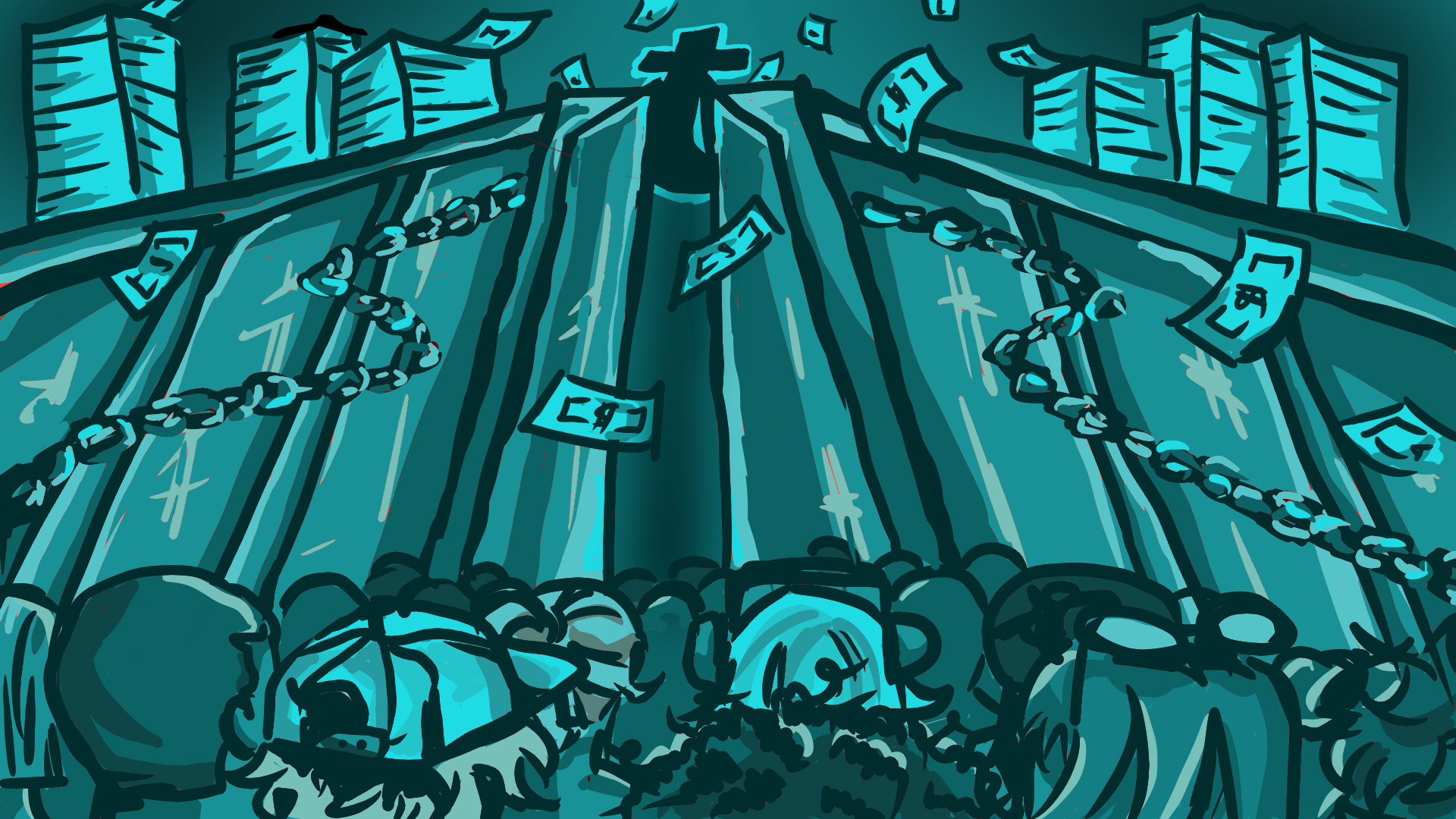
Ticketmaster’s biggest achievement is creating a platform that makes artists, venues, and consumers dependent on its platform. However, it is finally being threatened by these groups as they start to question and stand up against this dependence. As public backlash and artist activism intensifies, Ticketmaster must do something to mitigate this risk.
This raises several important questions, including: How did Ticketmaster become so dominant in the first place? Is Ticketmaster really creating value or removing it? What happens when people start standing up against the platform?
Brief History of Ticketmaster
Ticketmaster was founded in 1976 by Peter Gadwa and Albert Leffer as a software company that provided digital ticketing systems to retailers and universities. Under CEO Fred Rosen in the 1980s, the company quickly expanded across the United States through partnering with venues. They were quickly able to surpass their main competitor, Ticketron. In 1993, Microsoft co-founder Paul Allen acquired 80% stake in Ticketmaster and heavily invested in online ticketing. In 2010, it merged with Live Nation. While Live Nation Entertainment continued expanding through acquisitions, the company started facing mounting criticism over its market power, culminating in lawsuits from Taylor Swift fans in 2022 and an antitrust lawsuit filed by the U.S. Department of Justice in 2024 alleging that Ticketmaster and Live Nation had monopolized the live entertainment industry. Today, Ticketmaster is the world’s largest ticketing platform.
Ticketmaster’s Dominance
A significant portion of Ticketmaster’s success can be traced back to its 2010 merger with Live Nation, which transformed the company from a simple ticket provider to a vertically integrated entertainment provider. But what does this mean? Rather than participating in a single stage of the ticket purchasing experience, Live Nation Entertainment gained influence across promotion, venue operations, artist management, and ticket distribution. “The two companies [..] now control an estimated 70% of the ticketing and live event venues market.” Once Ticketmaster became vertically integrated and gained such a large market share, competitors began to struggle to replicate and gain power over Ticketmaster’s success. This structure has enabled the company to become deeply embedded within the industry, making it difficult for venues, artists, and consumers to avoid the platform.
Dynamic Pricing and Resale
Building a strong ecosystem is important, but it does not mean much if a company is not able to generate money by utilising that ecosystem. Once Ticketmaster established itself as the dominant player in live entertainment, the company's focus shifted from acquiring market power to monetization. This strategy is most evident in two of its most controversial practices: dynamic pricing and ticket resale markets.
Traditionally, concert tickets were sold at fixed prices determined before tickets went on sale. However, Ticketmaster's dynamic pricing model allows ticket prices to fluctuate in real time based on demand, similar to how airlines and hotels adjust prices. When there is high demand for a highly anticipated event, ticket prices increase automatically, sometimes reaching several times their original value.
From a strategic perspective, Ticketmaster argues that dynamic pricing is an efficient market mechanism. Rather than allowing third-party sellers to capture profits by purchasing tickets at low prices and reselling them at significantly higher values, dynamic pricing enables artists, promoters, and the platform itself to capture a greater share of that value. In theory, the system ensures that tickets are sold closer to what consumers are actually willing to pay.
This practice transforms concerts from cultural experiences into revenue-maximization exercises. Fans who expect tickets at advertised prices are often faced with dramatically higher costs during checkout, leading many consumers to view the system as unfair. While dynamic pricing may make sense economically, it has proven far less successful in maintaining consumer trust.
While dynamic pricing allows Ticketmaster to capture more value during the initial sale, the company’s involvement in resale markets has generated even greater controversy. Through Ticketmaster’s Verified Resale platform, consumers can resell tickets directly on the marketplace, often at prices way over their face value. For example, for the last leg of Taylor Swift’s Eras Tour the average resale value was $3,081. Similar to the Eras Tour, tickets for Harry Styles’ current tour can go for as high as $1000.
Supporters argue that integrated resale platforms provide a safer and more transparent alternative to third-party marketplaces by reducing fraud and ensuring ticket authenticity. However, critics claim that the system creates incentives for excessive markups while allowing Ticketmaster to profit from the same ticket multiple times. In many cases, the company collects fees during both the original transaction and subsequent resale transactions, generating additional revenue as ticket prices continue to rise.
Artists, Regulators, and the Future of Ticketing
For years, Ticketmaster's dominance appeared untouchable. Consumers frequently voiced frustration over rising ticket prices, service fees, and resale markups, yet little changed. Today, however, the company's position is being challenged by two stakeholder groups with far greater influence: artists and regulators.
Olivia Dean, the most recent recipient of the Best New Artist Grammy, recently became one of the most prominent artists to challenge Ticketmaster's resale practices after fans discovered tickets being resold at inflated prices. Her response reflected a growing concern among artists that ticketing systems designed to maximize revenue may conflict with efforts to keep concerts accessible to fans.
After this increasing controversy, the debate surrounding ticket resale markets recently took a significant turn in Ontario. In April 2026, the provincial government introduced legislation prohibiting tickets from being resold above their original purchase price, including fees and taxes. As a result, Ticketmaster was forced to remove numerous resale listings and adjust its marketplace to comply with the new regulations. The legislation was introduced with a clear objective: reducing ticket scalping and making live events more accessible to consumers.
Conclusion
Ticketmaster’s dominance has been built on creating an ecosystem that artists, venues and fans have struggled to avoid. While practices such as dynamic pricing have allowed the company to capture more value, they have also created growing frustration among the stakeholders it depends on. With artists and regulators starting to intervene, Ticketmaster's biggest challenge may no longer be maintaining its market power, but maintaining the trust that allows that power to exist. So now, ask yourself: how much do you trust Ticketmaster?