
Mineral Wealth in the Democratic Republic of the Congo: A Liability
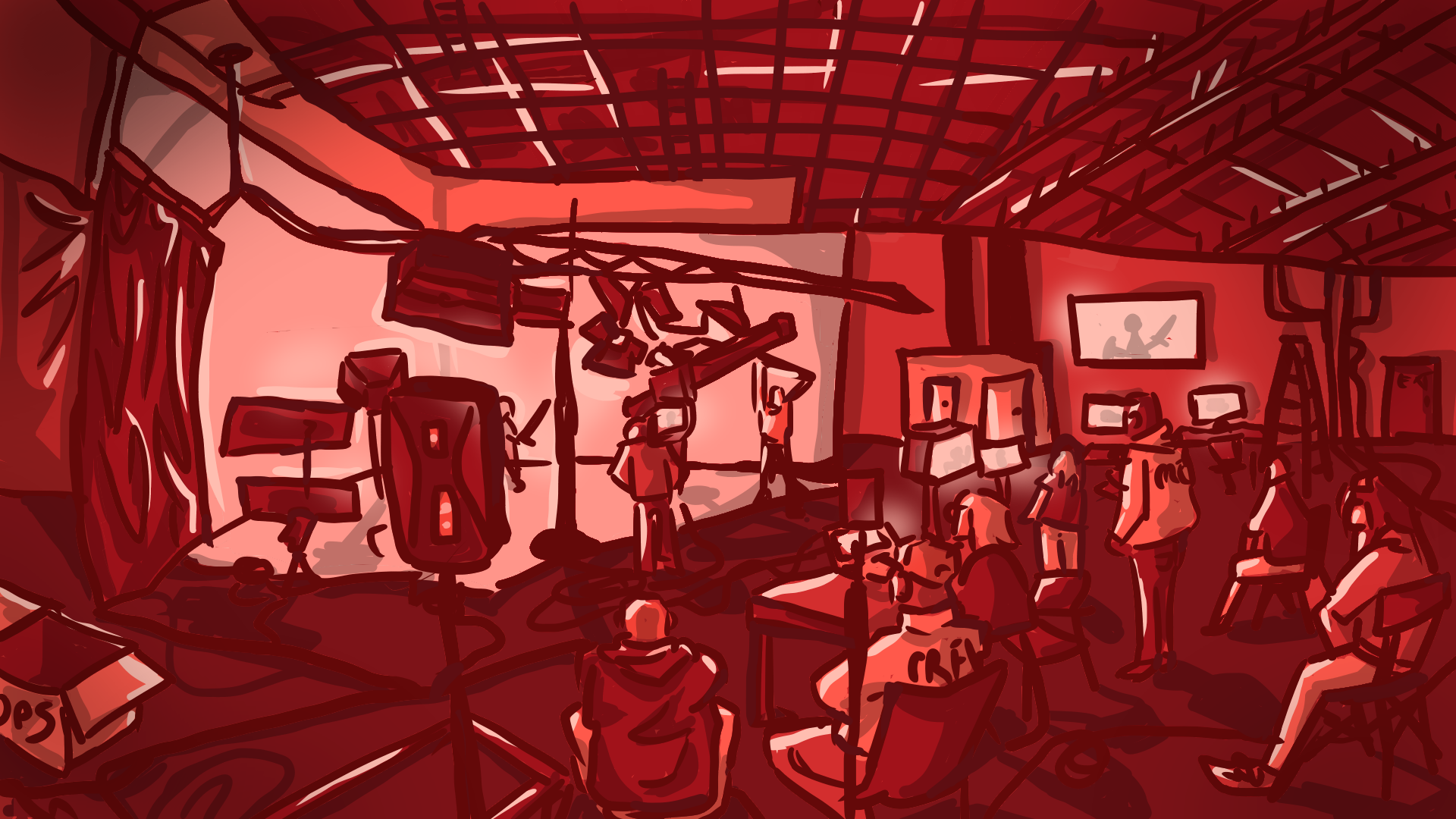
Illustrated by Mara Chintea
The Democratic Republic of Congo (DRC) has been in active conflict for decades. Government corruption, ethnic friction, and war in neighbouring countries have all contributed to the country’s struggle to achieve economic growth. This article examines the future of the DRC, and what needs to be done across the globe for the country to reach economic prosperity.
Tantalum, a mineral crucial in the development of electronic devices, is largely sourced from Central Africa and demanded globally. Tantalum is a component of the ore columbite-tantalite, known by the Congolese as “coltan.” Tantalum’s high resistance to corrosion, extreme malleability, and thermal stability make it indispensable for the manufacturing of iPhones, medical devices, and aerospace engines. The DRC is extremely mineral-rich, specifically in its Kivu provinces, producing more than 50 per cent of the global tantalum output in 2025 (Sinha & Ashitha Shivaprasad, 2026).
The DRC has been in conflict, driven by civil war in Rwanda, since 1996. This escalated on January 27, 2025, as the rebel group M23 captured provinces in eastern Kivu. M23 is one of many rebel groups currently active in the DRC. These groups target mineral-rich areas as control of coltan mines offers significant financial gain amid the increasing demand for technology. Coltan is extremely difficult to regulate as it is smuggled into Rwanda then from there into the global technology industry.
The DRC has been unable to leverage mineral wealth to improve its struggling economy, suffering from the “resource curse,” a phenomenon in which mineral-rich countries have weak social systems and slow growing economies (Matthysen & Gobbers, 2022).
Civilians are forced to work for rebel groups as mining remains one of the few reliable ways to make a living. The DRC is one of the five poorest nations in the world, with 69 per cent of its population under the poverty line (World Bank Group, 2025). This has created a humanitarian crisis where workers have no protection against deadly conditions and child labour runs unchecked. Gender-based violence is common and illegitimate groups create a constant threat of violence.
Government corruption has perpetuated the DRC’s inability to control its natural resources. The DRC’s government is challenged with balancing the security of citizens while also maintaining enough power and transparency to keep control over mineral rich areas (Burnley, 2011). It has continuously failed to do so. Today, ambiguous levels of formal and customary power create mistrust in the workforce (Burnley, 2011). Proper legal reform is required to stop the “resource curse,” and reduce the risk of conflict crossing borders between countries.
The DRC’s army, the Forces armées de la République démocratique du Congo (FARDC), enables armed groups to maintain control over mines. For decades, the FARDC has used its power to extort local communities surrounding the mines. They have often accepted bribes from armed groups to work as private security guards around mines (Matthysen & Gobbers, 2022). This volatile and unpredictable government power has made attracting global investment extremely difficult.
Identifying one single driver of conflict in the DRC is impossible. Winning control of coltan rich areas is not the only motivation behind the violence, instead, it is the reason that armed groups have enough power to establish long-term control in the country.
Coltan is exploited on a large scale across the DRC to finance the movements of armed groups. This can be seen in the current M23 armed force conflict, with experts believing the Rwandan government has a stake. Controlling coltan rich mines provides economic benefits for Rwanda that are used to perpetuate ethnic tensions, fueling the continued violence between countries (Matthysen & Gobbers, 2022).
Coltan’s contribution to the conflict further demonstrates the “resource curse.” The ore continues to be the reason armed forces are able to finance themselves. Centralized government control is difficult to enforce and social programs in local areas are non-existentant (Matthysen & Gobbers, 2022).
In the 21st century, technology is one of, if not the, most powerful industry in the world. With the recent AI boom, the global appetite for tantalum has surged. Without the DRC’s mineral deposits, the materials required to continue the evolution of AI may not be met (Global Economic Prospects, 2026).
Demand for coltan is growing at a rate of 5.58 per cent a year between 2021 and 2026 (Ojewale, 2022), this has made concern surrounding the DRC’s economy greater as mining continues to become more profitable for armed forces. If the DRC’s government cannot find a way to regain control of coltan, conflict will continue to run rampant throughout the country.
As this conflict takes the global stage, The United States and the European Union have made statements of intention to avoid any tantalum refined from the DRC’s coltan, though it is near impossible to identify ethically mined ore (Chiara, 2012). As coltan is smuggled from the DRC by Rwanda, it crosses borders and finds its way into global supply chains. Once mixed with ethical supply, coltan lacks any way to distinguish itself. When large manufacturers receive this tantalum, they have no way of knowing if the coltan ore it was refined from was ethically sourced.
Canadians are not aware of the role we play in the conflict in the DRC. The devices we use daily, such as our iPhones, iPads, and cars, have been manufactured from coltan mined by armed groups in the DRC. Huge name companies such as Apple, Tesla, Google, and Microsoft have all been exposed for using unethically sourced materials from the DRC.
Canadian mining companies have also contributed to the crisis directly. In 2017, the activity of the Canadian company Ivanhoe Mines in the DRC caused a serious humanitarian crisis as a local community was displaced in order to expand their mines. The homes Ivanhoe Mines had claimed they would rebuild for local families lacked electricity, running water, and a sewage system (Amnesty International, 2023, p. 81).
However, Canada has participated in peacekeeping efforts. From 1999 to 2010 Canada took part in the UN Organization Mission in the Democratic Republic of Congo established by the UN Security Council, alongside several other UN peacekeeping efforts (Canada, 2024). Canada’s contributions have centered mainly on military and police assistance, alongside donations. Today, the DRC is the sixth largest recipient of Canadian development assistance, prioritising combatting gender based violence, improving health, with a focus on reproductive health, creating inclusive governments, and child protection (Canada, 2024).
Globally, 2026 has brought major economic turmoil due to the current conflict in the Middle East. In 2025 there was improved economic growth in Sub Saharan Africa (SSA), but it was too slow to meet development needs and reduce economic shock. As a result, SSA has struggled to combat inequality. In order to see real change to the economy in SSA, Africa must raise consistent annual growth of 7 per cent over decades. This will require capital stock growth from 3 per cent to 8.7 per cent annually by 2030 (Bank, 2026, p. 4). To actualize this growth, new strategies such as the New African Financial Architecture Development framework by the African Development Bank Group aim to address financial fragmentation, risk allocation, and coordination across Africa to develop reliable financing and production of natural resources (Bank, 2026, p. 5).
The implementation of these changes come with an added challenge for the DRC, as China has large investments in their current mining and government systems. This has resulted in limited access to profits derived from mineral wealth among the Congolese people and a lack of investment into social services (Center for Preventive Action, 2025).
In Canada, technology is ubiquitous and effortless, a near-perfect facade for the devastating exploitation that enables its production. Conflict in the DRC is layered with government corruption, ethnic tension, exploitation, and the impossible task of regulating a resource beyond the country’s control. In order to make real progress in the DRC, consumers need to be knowledgeable and intentional when purchasing electronics. Looking forward, new and innovative technology aims to provide the ultimate convenience, before buying in, consumers must ask themselves: at what cost?